How much do cash buyers pay for houses? Most cash offers land somewhere between 50% and 85% of what the house would be worth after repairs. Where yours falls depends almost entirely on how much work the house needs, how long the buyer expects to hold it and how much profit they build in. A move-in ready house sits at the top of that range; a house with a failed roof, old plumbing and a fire-damaged kitchen sits near the bottom.
I'm Christian Castro. I buy houses for cash in Fresno and the Central Valley, and I'm also a licensed California realtor (DRE #02195959), so I write cash offers and I list homes on the open market. In this guide I'll show you the formula cash buyers actually use, run it on a typical Fresno house, and explain what moves the number up or down. Once you understand the math, you can tell a fair cash offer from a lowball in about five minutes.
The short answer
- Typical range: about 50% to 85% of after-repair value (ARV), depending on condition. Light-work houses get the high end; heavy rehabs get the low end.
- The formula: ARV minus repairs, resale costs, holding costs, the buyer's closing costs and the buyer's profit equals the offer.
- The "70% rule" is a rough investor shortcut (70% of ARV minus repairs), not a law. In pricier California markets, buyers often go higher.
- Fresno example: on a house worth $435,000 fixed up that needs about $45,000 of work, a fair formula offer is around $294,000.
- Compare to your net, not the list price. Listing has its own costs. A fair cash buyer will show you both numbers side by side.
How much do cash buyers pay for houses? The typical range
When people ask how much cash buyers pay, they usually want a percentage. The honest answer is a range, because a cash buyer isn't paying for your house as it sits today. They're paying for what it will be worth after they fix it and resell it, minus everything it costs them to get there. That future value is called the after-repair value, or ARV.
Here's roughly how offers break down by condition, using the same cost assumptions I'll walk through below:
| House condition | Typical work needed | Offer as a share of ARV |
|---|---|---|
| Move-in ready or close | Paint, flooring, landscaping | About 75% to 85% |
| Dated, needs updating | Kitchen, baths, some systems | About 65% to 75% |
| Major repairs | Roof, foundation, plumbing, electrical | About 55% to 65% |
| Severe damage or full gut | Fire, flood, structural, hoarder cleanout | About 50% or less |
These ranges come from running the formula below with different repair budgets. They aren't a quote, and any buyer who gives you a percentage without looking at the house is guessing. But if someone offers 40% of ARV on a house that only needs carpet and paint, you'll know something is off.
Cash buyers are also a bigger part of the market than most sellers think. In February 2026, 31% of home buyers paid all cash (opens in a new tab), according to the National Association of REALTORS. That includes regular families paying cash, not just investors, which is part of why move-in ready houses don't usually need a "we buy houses" company at all.
The formula behind every cash offer
Almost every serious cash buyer, from a local investor like me to a national company, works backward from the resale price. The formula looks like this:
Cash offer formula
Offer = After-repair value − Repairs − Resale costs − Holding costs − Buyer's closing costs − Buyer's profit
Here's what each piece means:
- After-repair value (ARV). What the house should sell for once it's fixed up, based on recent sales of similar updated homes nearby. This is the most important number in the whole offer. If the ARV is wrong, everything below it is wrong too.
- Repairs. The full cost to bring the house up to the standard of those comparable sales: roof, HVAC, plumbing, electrical, kitchen, baths, flooring, paint, permits. Experienced buyers add a contingency, often around 10%, for the surprises they'll find once the walls are open.
- Resale costs. When the buyer sells the finished house, they pay agent commissions, escrow, title insurance and transfer tax just like any other seller. Our guide to seller closing costs in Fresno breaks those down line by line.
- Holding costs. Loan interest, property taxes, insurance and utilities for every month the buyer owns the house. According to ATTOM's Q1 2026 home flipping report (opens in a new tab), the typical flip took 165 days from purchase to resale, so these costs add up.
- Buyer's closing costs. What the buyer pays to close on your house. When you sell to us, we pay the normal escrow and title costs, so this comes out of our side, not yours.
- Buyer's profit. The margin that makes the deal worth the risk. Repairs run over, markets dip and rates rise; the profit is what absorbs those surprises.
Once you know these pieces, you can ask any cash buyer to show you their numbers for each one. A fair buyer will.
The 70% rule, and why it's only a starting point
If you've searched this topic before, you've probably run into the 70% rule. It says an investor shouldn't pay more than 70% of the after-repair value, minus the cost of repairs. On a $435,000 ARV with $45,000 of work, that's:
($435,000 × 70%) − $45,000 = $259,500
The rule is popular because it's fast. But it was built as a quick screen for flippers, not a pricing method, and it treats a $150,000 house and a $600,000 house the same way. BiggerPockets' long-running guide to the 70% rule (opens in a new tab) notes that in California the percentage can run as high as 80% or 85%, because some costs (like title fees) don't grow in step with the price, and because competition between buyers pushes offers up.
That's why the full formula matters. In the example below, a line-by-line calculation on the same house comes out about $34,000 higher than the 70% rule. If a buyer quotes you the 70% rule and won't show their work, ask them to.
Worked example: a typical Fresno house
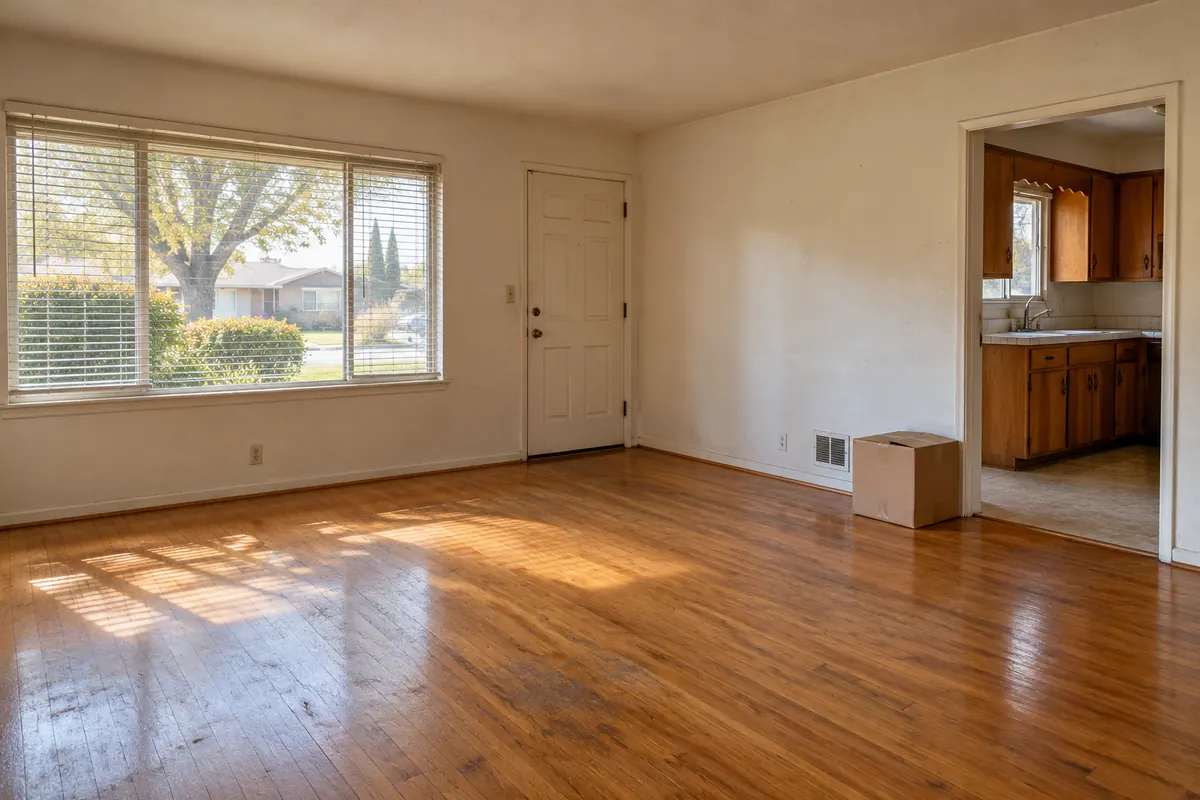
Let's run the numbers on a house that's common around Fresno: a 1960s or 1970s single-story stucco ranch, three bedrooms, two baths, original kitchen and baths, an aging roof and a dead lawn. Fixed up, it would sell close to the county median. According to the California Association of REALTORS' May 2026 sales and price report (opens in a new tab), the median price of an existing single-family home in Fresno County was $435,000, with homes taking a median of 21 days to sell. We'll use that as our ARV.
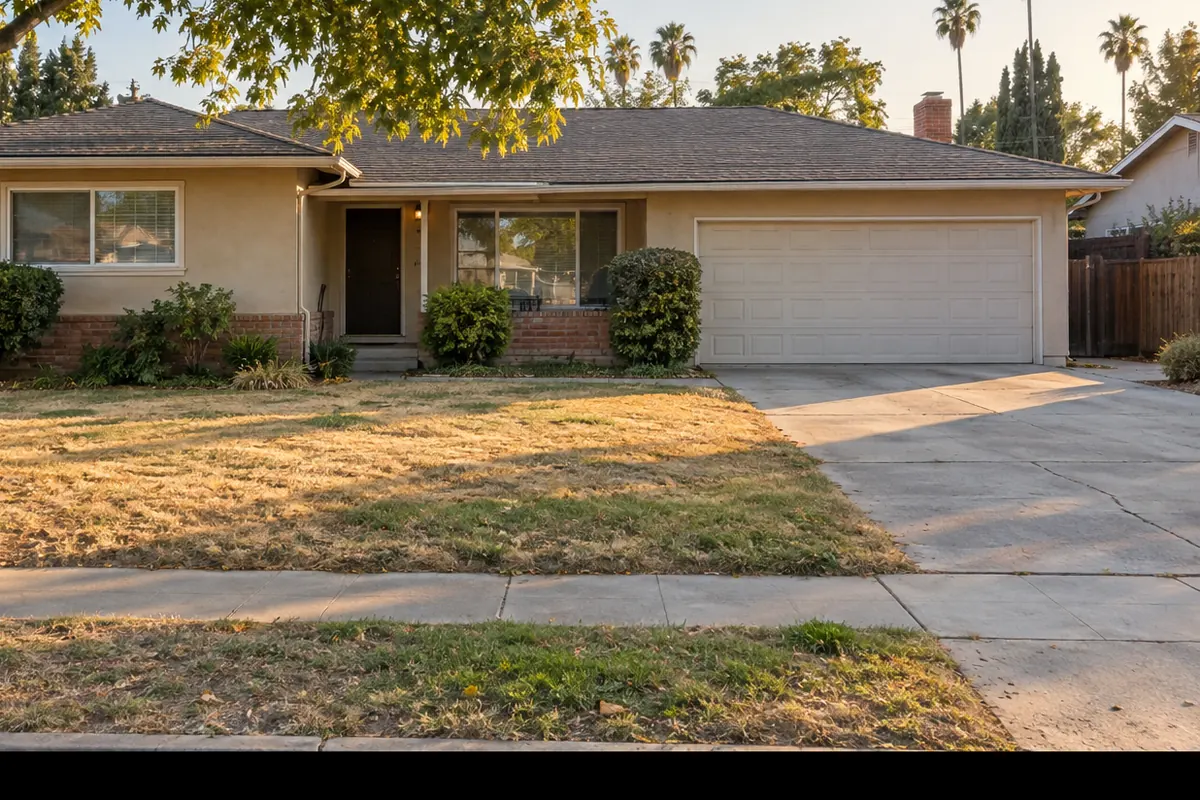
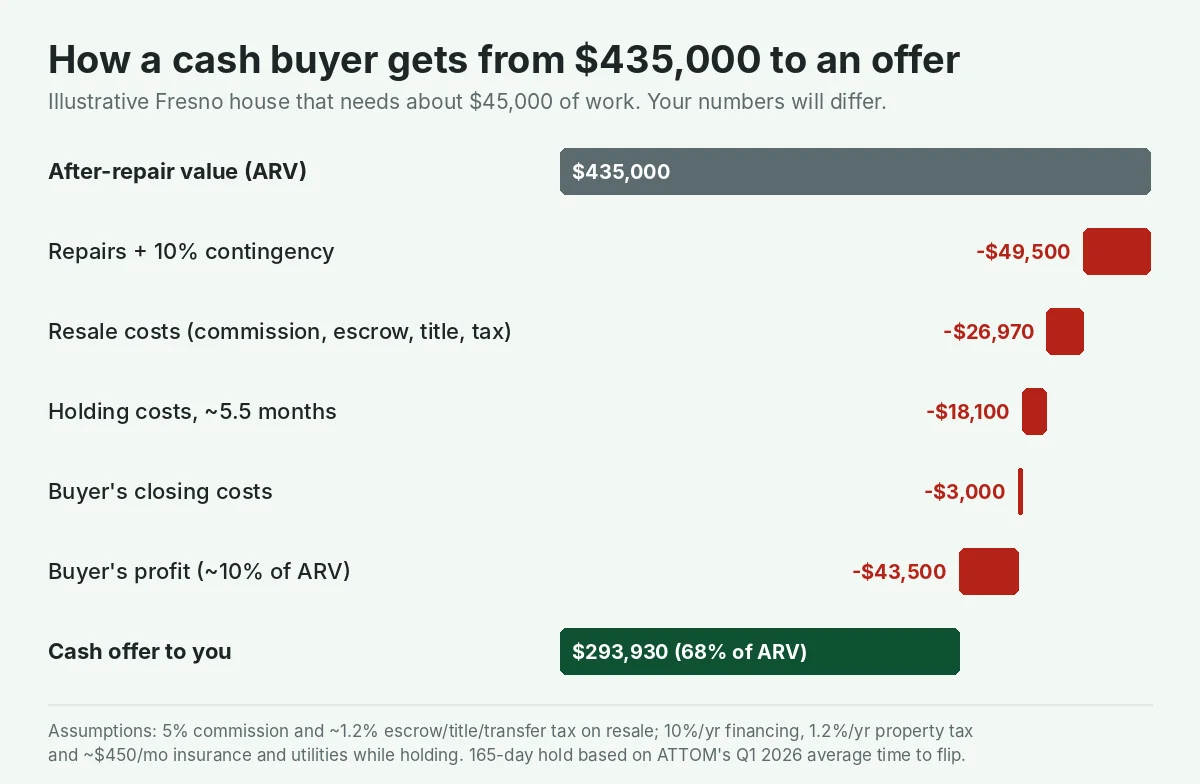
Say the house needs about $45,000 of work: a new roof, kitchen and bath updates, flooring, paint, and some landscaping. Here's how a fair cash buyer would get to an offer:
| Line item | Amount | How it's figured |
|---|---|---|
| After-repair value | $435,000 | Fresno County median, May 2026 |
| Repairs + 10% contingency | −$49,500 | $45,000 scope plus $4,500 cushion |
| Resale costs | −$26,970 | 5% commission plus about 1.2% escrow, title and transfer tax |
| Holding costs, about 5.5 months | −$18,100 | Financing at 10% a year, property tax, insurance and utilities |
| Buyer's closing costs | −$3,000 | Escrow and title on the purchase |
| Buyer's profit | −$43,500 | About 10% of ARV |
| Cash offer | $293,930 | About 68% of ARV |
A 10% profit might sound like a lot, but it's thinner than the headlines suggest. ATTOM reported a typical gross flipping profit of $66,000 nationwide in early 2026, a 25.4% margin on the purchase price. That "gross" figure is before repairs, holding and selling costs, which is exactly what the formula above pulls out line by line.
Now compare that $293,930 to what the seller would actually net by listing the house as-is. A buyer using a mortgage may not be able to finance a house with a failing roof, so the realistic list price is lower than $435,000, and the seller still pays commission, escrow and transfer tax, plus months of mortgage, taxes and utilities while it sits. Our cash offer vs. listing guide runs that side-by-side comparison in detail.
Want to see this math on your house?
Call or text Christian at (559) 512-6998. You'll get an all-cash offer with every line item shown, plus an honest listing estimate so you can compare.
Call (559) 512-6998Get My All-Cash OfferHow condition changes what cash buyers pay
Keep the same $435,000 ARV and change only the repairs and the time it takes to finish them. The offer moves a lot:
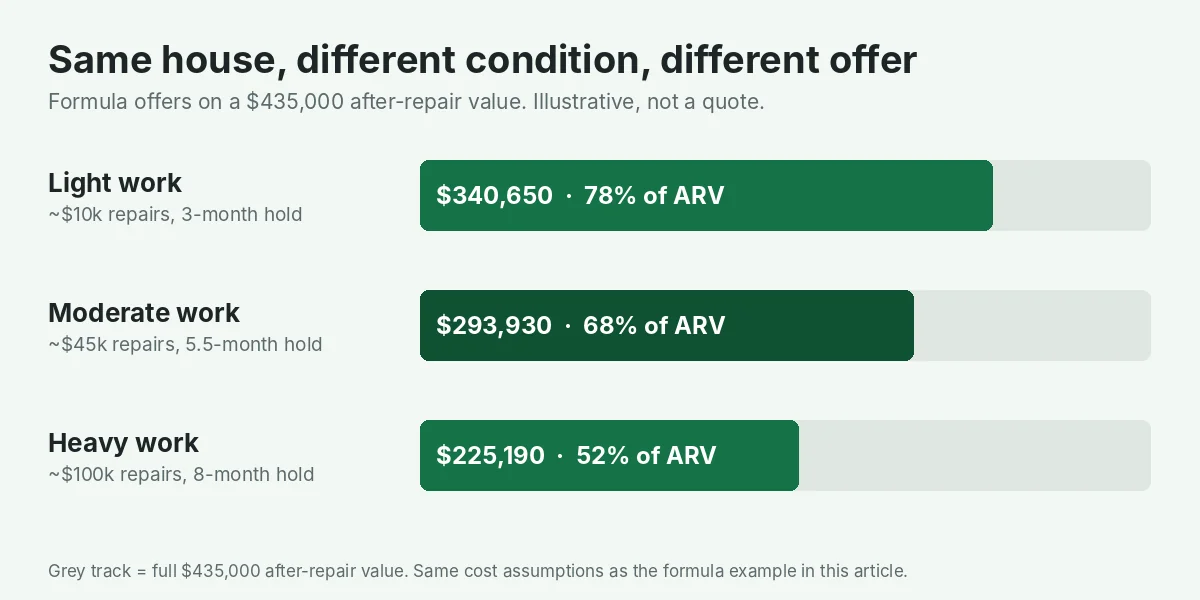
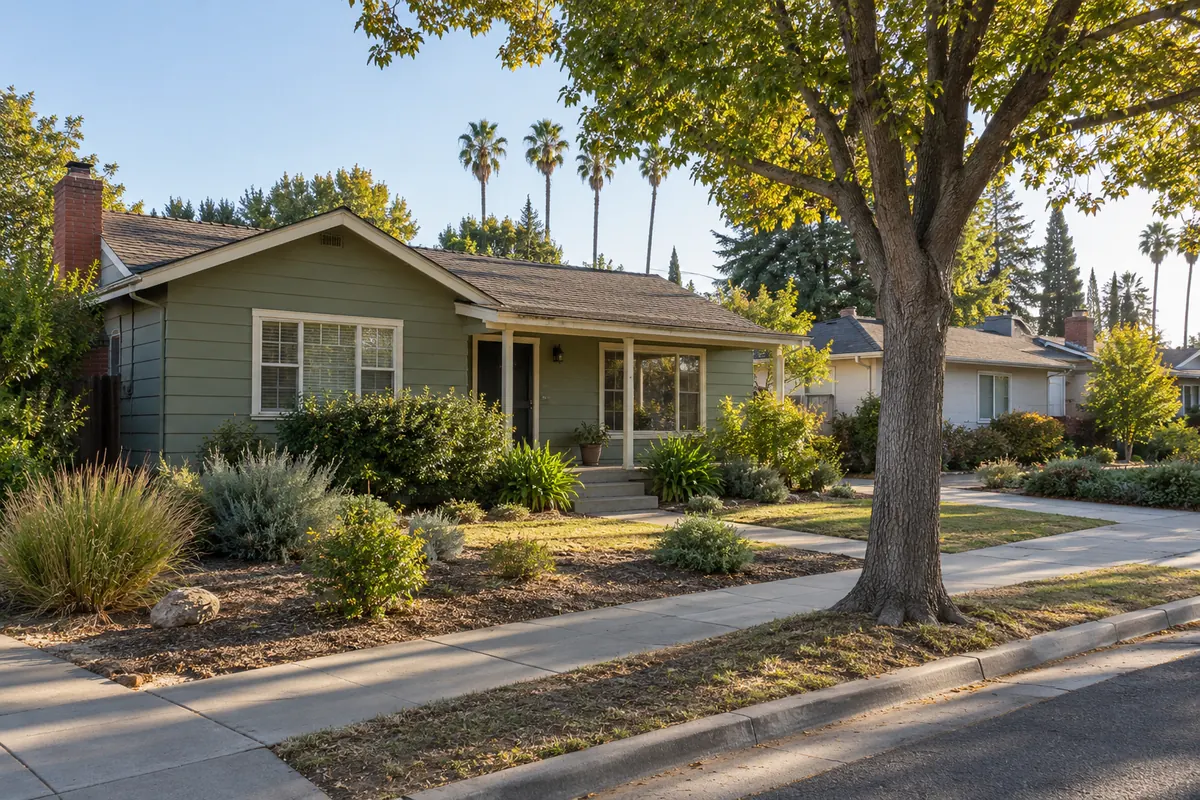
Two things are going on. First, every dollar of repairs comes straight off the offer, plus the contingency. Second, bigger jobs take longer, so holding costs climb too. A house that needs $100,000 of work doesn't just cost $100,000 more; it ties up the buyer's money for months longer and carries more risk of surprises.
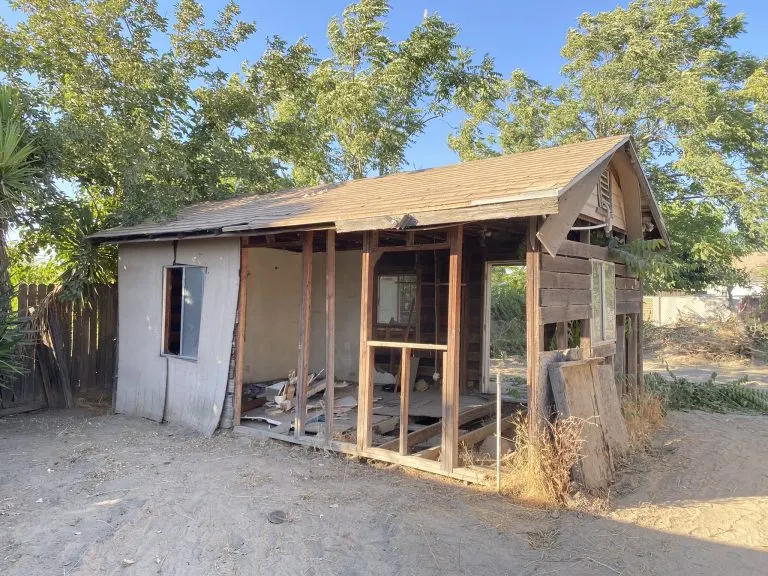
That's also why houses with fire damage, foundation problems or unpermitted additions get the lowest offers. They're the hardest to estimate and the slowest to finish. If that sounds like your house, our page on selling a house as-is in Fresno explains how we handle those.
Not all cash buyers pay the same
"Cash buyer" covers several very different businesses, and each one prices differently:
- Local direct buyers (like us) buy the house themselves, usually to renovate and resell or rent. They use the formula above and can often move fastest because they know local repair costs and resale values.
- Landlords and buy-and-hold investors price off the rent the house will bring in, not the resale. They may pay more for a house in a strong rental area, and less for one that would rent poorly. Selling a house that already has tenants? See our page on selling a house with tenants.
- Wholesalers put your house under contract and then sell that contract to another investor for a fee. The end buyer's offer has the wholesaler's fee baked in, so you get less. Ask directly: "Are you buying this house yourself, or assigning the contract?"
- Instant-offer companies buy mostly newer, move-in ready homes in certain price ranges and charge a service fee plus repair deductions after their inspection. Compare their net number, not the headline offer.
- Regular buyers paying cash are retail buyers who happen to have the money. They pay close to market value, but they want a house in good shape, just like a buyer with a loan.
If your house is in good condition, a regular buyer on the open market will usually pay the most, and I'll tell you that. Cash investors earn their spot when the house needs work, the timeline is short, or the situation is complicated, like an inherited house, a looming foreclosure or a divorce.
How to get a higher cash offer
You can't change the after-repair value much, but you can shrink the buyer's risk, and less risk means a better number. Here's what actually helps:
- Share what you know about the house. Roof age, past leaks, the year the water heater was replaced, any inspection or termite reports. Unknowns get priced as worst cases.
- Get two or three offers. Fresno has plenty of cash buyers. Comparing written offers is the quickest way to see who's being fair.
- Be flexible on the closing date if you can. A buyer who can line up contractors before closing can finish faster and pay a bit more.
- Clear up title issues early. Liens, a missing heir or an old loan that never got reconveyed all slow the deal. The sooner escrow knows, the less buyers discount for it.
- Skip the big repairs. Spending $15,000 on a roof rarely raises a cash offer by $15,000, because the buyer would have done it cheaper at scale. A light cleanout is the only prep that usually pays off.
- Ask for the numbers. Request the ARV, the comparable sales and the repair estimate. If the ARV is too low or the repair estimate looks padded, point it out. Good buyers will adjust when you're right.
Get your all-cash number, line by line
Tell us about your house and we'll send a written, no-obligation all-cash offer that shows the ARV, repairs and costs behind it. No repairs, no commissions, and you can close in as little as 7 days.
Red flags in a cash offer
Most cash buyers are honest, but a few habits should make you slow down:
- A high offer with a long inspection period. Some buyers bid high to win the contract, then cut the price after "finding" problems. Ask what could change the price after you sign, and get the inspection period in writing.
- A tiny or late earnest money deposit. Serious buyers put real money into escrow quickly.
- Any upfront fee to you. You should never pay to receive an offer. Always close through a neutral escrow or title company.
- No license and no local track record. If someone says they're a realtor, check their license on the California DRE public license lookup (opens in a new tab).
- Pressure to sign today. A fair offer will still be fair tomorrow.
And remember, selling as-is doesn't remove California's seller disclosure duties. Tell the buyer what you know about the house; it protects you as much as them.
How much do cash buyers pay for houses? FAQ
Do cash buyers pay market value?
Cash investors usually pay less than full market value because they take on the repairs, holding costs, resale costs and risk. Most offers fall between about 50% and 85% of the after-repair value, depending on condition. Regular buyers paying cash for a move-in ready home often pay close to market value.
Is 70% of value what cash buyers pay?
Not exactly. The 70% rule (70% of after-repair value minus repairs) is a quick investor screen. In California markets, buyers often go higher once they run the full numbers. In our Fresno example, the full formula came out about $34,000 above the 70% rule.
How do cash buyers figure out the after-repair value?
They look at recent sales of similar updated homes nearby, usually within the last few months and close by, with a similar size, age and layout. Ask the buyer which sales they used so you can check them.
Do cash buyers pay closing costs?
It depends on the buyer. When you sell directly to us, there are no commissions or fees, and we pay the normal escrow and title closing costs. Your mortgage, any liens and prorated property taxes are still paid off from the sale proceeds.
Can I negotiate a cash offer?
Yes. The easiest way is to question the inputs: the after-repair value, the repair estimate and the timeline. Showing the buyer a recent comparable sale or a contractor's bid is more persuasive than simply asking for more.
How fast can a cash buyer close?
Because there's no lender or appraisal, a cash sale can close in as little as 7 days once title is clear. Probate, divorce or foreclosure situations may take longer because of court or lender steps.
Want to see what your house would bring? Read more about who I am and how I work, check the latest Fresno housing market report, or get your all-cash offer. You'll see every number behind it, and if listing would put more money in your pocket, I'll tell you.